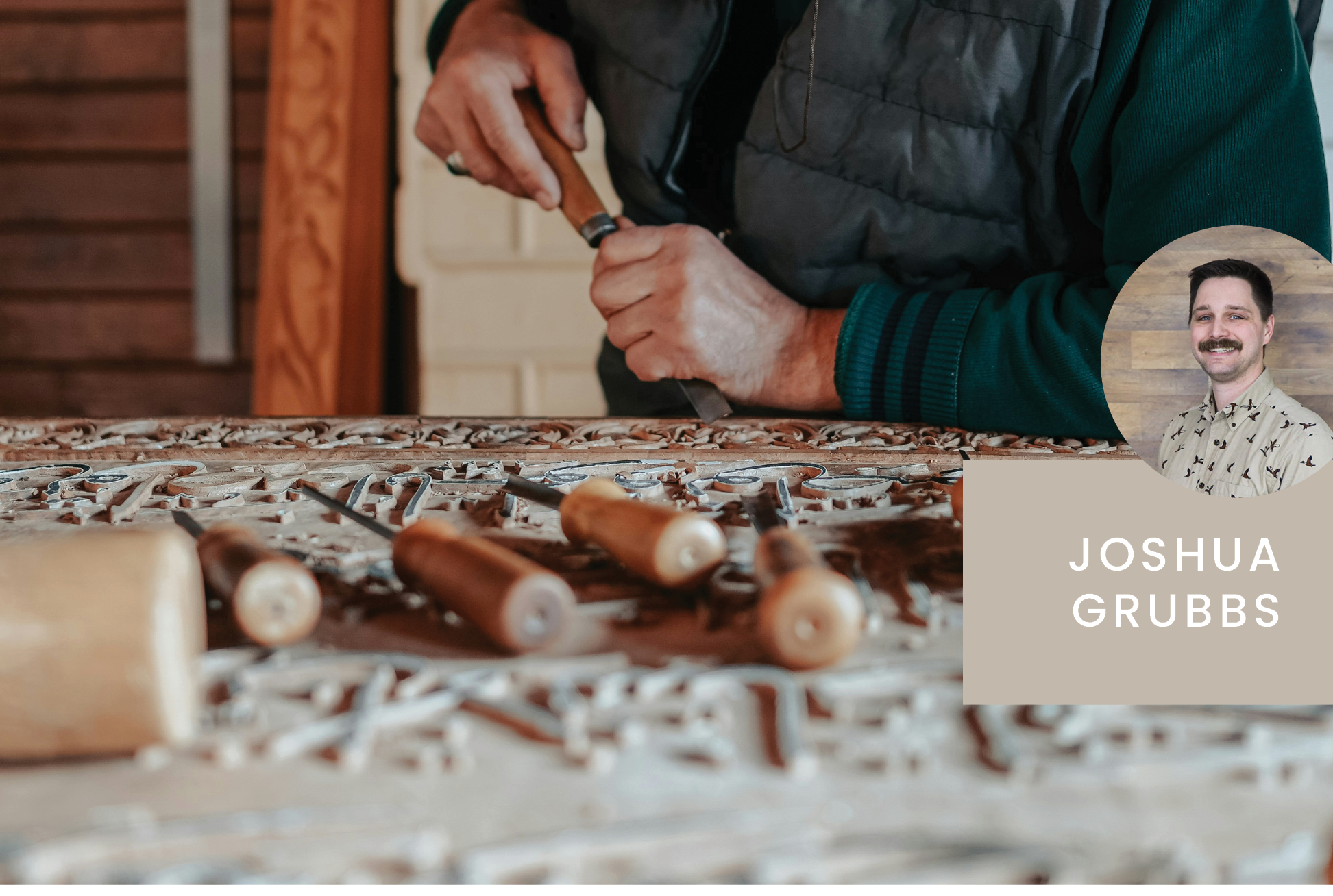


Shall the ax vaunt itself over the one who wields it or the saw magnify itself against the one who handles it? As if a rod should raise the one who lifts it up, or as if a staff should lift the one who is not wood!
I’m not sure how much you remember about your high school education. It seems like each year that passes a little bit more of what I learned seems to float away. Something that has always stuck with me, though, was my sophomore English class where we read some of the Greek tragedies. I call to mind the hubris, or pride, of the main characters. They always thought they could outwit their enemies, or even the gods, because of how smart, special, strong, or whatever other qualifier they perceived themselves as being.
In Isaiah’s discourse above he is chastising the kingdom of Assyria, and ultimately by extension all the nations whom God may choose to use to further His purposes, for their pride and arrogance because of their status. Isaiah shows us that God has deigned to use Assyria to punish unfaithful Israel, but that Assyria believes themselves to be better than the one wielding the tool. “By the strength of my hand I have done it, and by my wisdom, for I have understanding,” boasts the king of Assyria in Isaiah 15:13. Instead of recognizing that God has enabled Assyria (a blip on the radar of history by the way) to be mighty, the kingdom thinks that they have accomplished great things of their own accord.
I once had a professor who said that we all like to think of ourselves as the prophets of Israel, but we really have a lot more in common with the corrupt rulers and profaners of God that the prophets are speaking to. We have a lot more in common here with Assyria than we do with Isaiah. We are often the ax that vaunts ourselves over the one who wields it. If you happen to be near a home improvement store, maybe make a pitstop sometime and just stare at the power tools. They’re not doing too much on their own, are they? The metaphor is heavy-handed, but it is nonetheless true.
Our pride and arrogance, like Assyria and like the hubristic leads in all those Greek tragedies, can keep us from recognizing two crucial things. First, it denies the proper adoration due to God. “In Him we live and move and have our being,” says Paul in Acts 17:28. It is in God alone that we can be here on Earth, and our unchecked pride can keep us from recognizing this simple fact.
Second, this fatal sin denies us, as God’s creation, the wholeness that God desires in our lives. Let’s think about the ax in the hardware store again. Is the ax there to sit on the shelf? No, the ax exists to be used chopping down trees. If the ax always thinks it can accomplish everything on its own then the ax is doomed to stay stationary, not doing the task it was expressly created to do, until it rusts and decays past the point of any usefulness.
We are not made to rust and decay. God created you and I for a purpose, and He earnestly desires that we would step into that purpose. So much so, in fact, that Christ emptied Himself to become man, to live and laugh and love and weep and die and defeat death so that you and I could have life, and have it abundantly. Praise God, you and I were created for something. And praise God, our pride and arrogance does not have to remain in place to keep us from living for the Kingdom.
Let us joyfully be tools in the hands of the loving maker, almighty God, as He uses us to bring about the Kingdom of God on Earth as it is in heaven.
Looking to have quality spiritual content delivered to your inbox? We can help with that.


Joshua Grubbs